One of the first Irish myths that really stuck in my head was the story of The Children of Lir. Maybe because it was about swans, and I was obsessed with ballet, Tchaikovsky & Swan Lake, or maybe because part of it was reputed to have taken place not far from where I grew up, on the north coast of Ireland. The area around Ballycastle, Kinbane Castle & Rathlin Island have strong connections with this legend. Whatever the reason, this is a story I keep returning to as a designer.
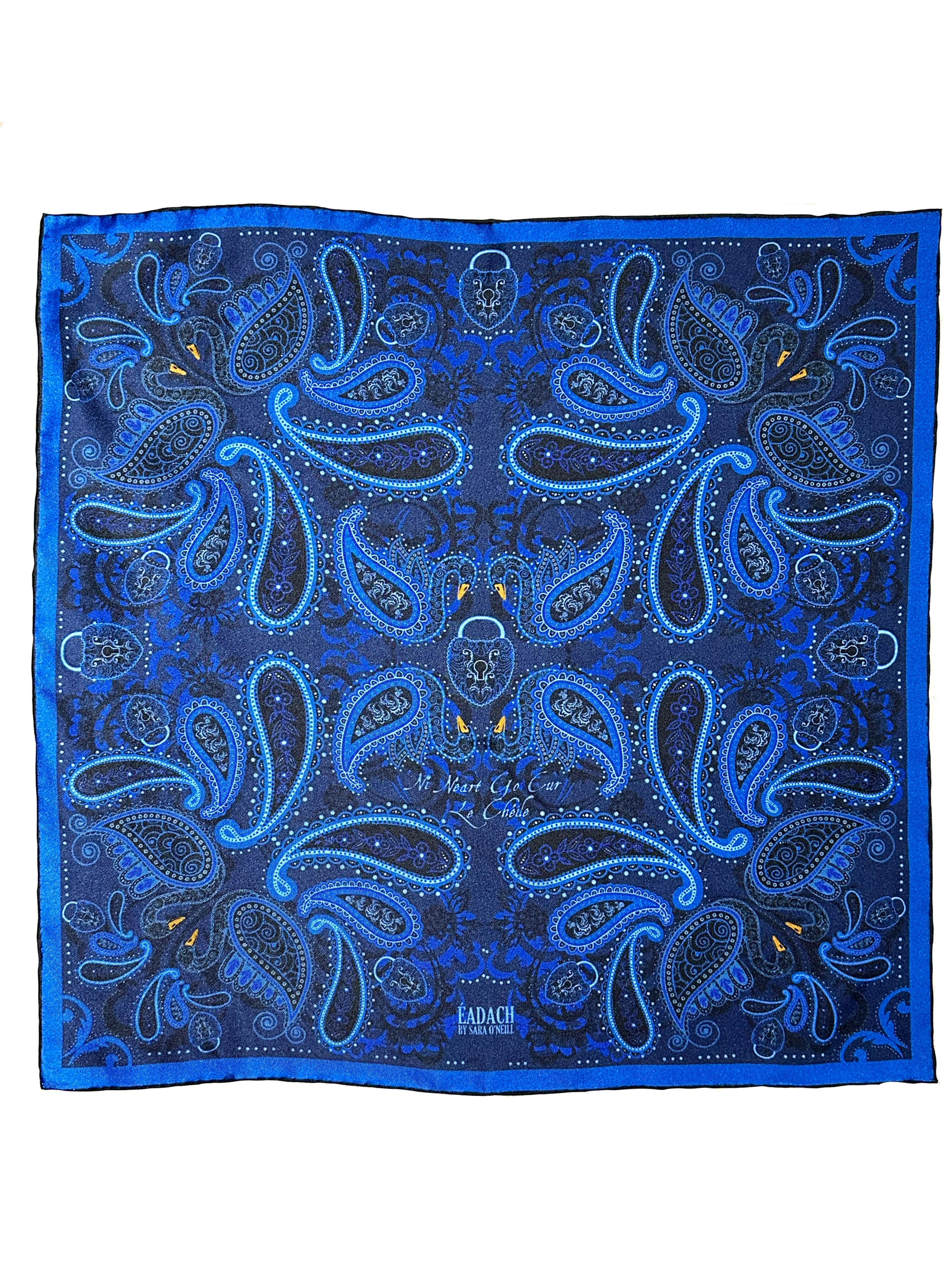
Many years ago, in Ancient Ireland, there lived a ruler and king of the sea, called Lir. He had a beautiful wife, Aoibh, and four children, a daughter Fionnuala, and three sons, Aodh & twins, Fiachra and Conn. When the children were young Aoibh died and Lir, wanting his children to have a mother, married her sister, Aoife, who was said to have magical powers. After a while Aoife became jealous of the King’s love for the children and turned them into swans for nine hundred years, three hundred on Lough Derravaragh in Co Westmeath, three hundred years on the stormy, tempestuous Sea of Moyle, and a final three hundred on the rocky island of Inis Glora in Co Mayo. ‘Out with you upon the wild waves!’ The siblings were chained together by enchanted silver chains to stop them becoming separated by the winter storms they weathered for centuries (I added little padlocks because once a punk, always a punk) The spell was eventually broken by a bell heralding St Patrick’s arrival to Ireland.
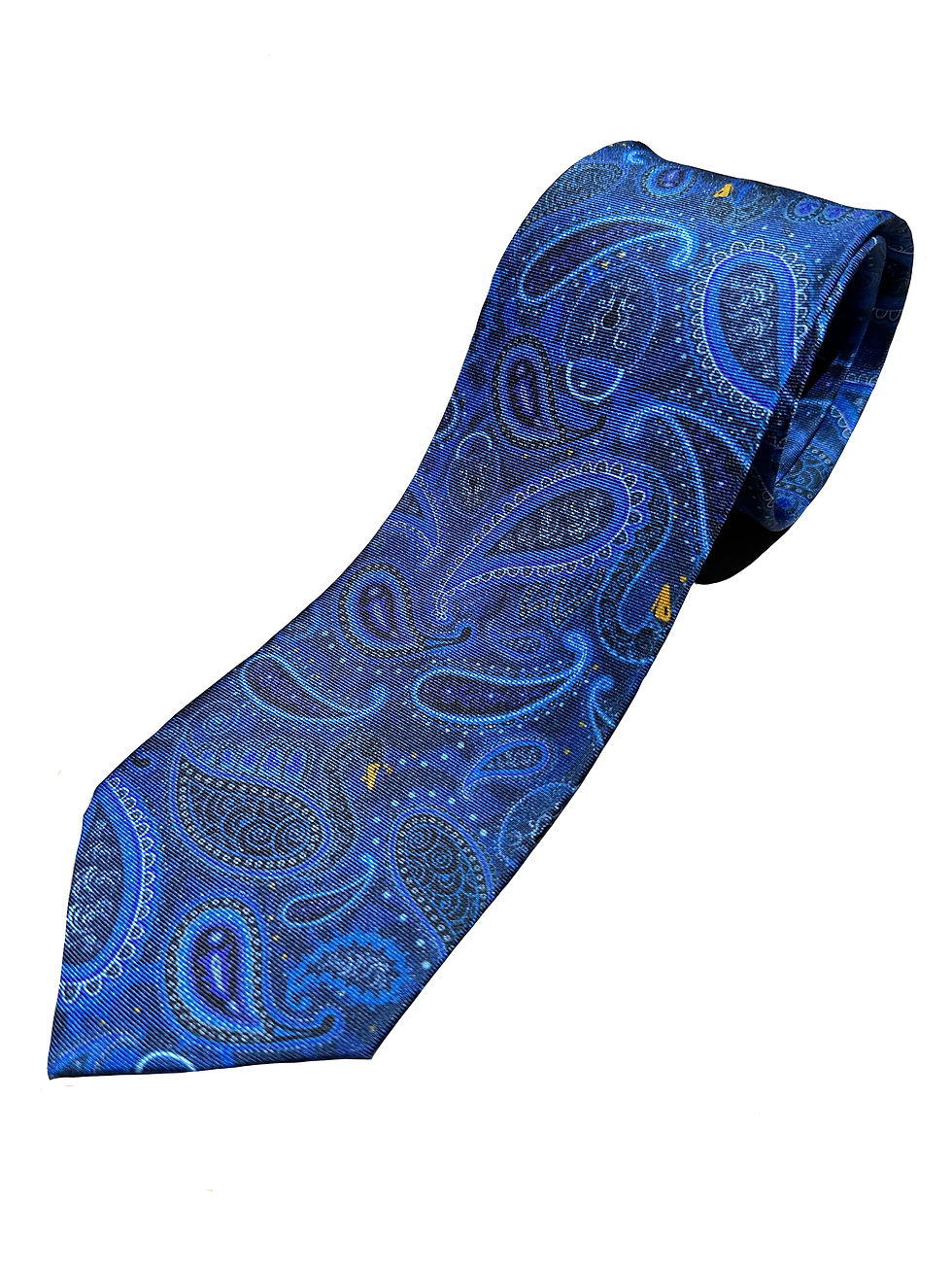
For this print I wanted to create an intricate, vintage style Boteh/ Paisley inspired print, turning some of the traditional motifs into swans. What is commonly referred to as the ‘Paisley pattern’, became synonymous with the Scottish town of the same name due to textile production in this pattern during the 18th & 19th centuries. But the pattern has a much more ancient history spanning the globe, including India & Egypt. The teardrop motif at the centre of this pattern is a Boteh, a Persian word meaning bush or shrub and was often associated with the cypress tree - which was a symbol of life and eternity. Imports from the East India Company via the silk routes brought the pattern to Europe in the 18th and 19th Centuries & following the arrival of luxurious Kashmir shawls the pattern became incredibly popular & the shawls were soon imitated throughout Europe.
In the 19th century the pattern began to attract a rebellious, progressive following. It was often worn by Oscar Wilde, William Morris and the Arts-and-Crafts movement adapted the print, whilst William Holman Hunt and other Pre-Raphaelites depicting paisley textiles in their paintings & it became associated with an arty, bohemian crowd. In the 60s & 70s the pattern was adopted by musicians & fashion designers & has been synonymous with rock n roll & counterculture since.
I love this pattern with its incredibly storied history. It illustrates the importance of textiles as an art form, as a way of communicating, storytelling & representing different cultures & eras. The idea of the botteh motif being inspired by nature, associated with life & eternity resonates with the story of the Children of Lir & from a design perspective the shape of the motif lends itself to a swan.
‘Ní Neart Go Cur Le Chéile.’ ‘There’s no strength without unity’. This phrase stuck in my head whilst designing this print, referencing the importance of the Children of Lir being together to weather the storms. It features in the pocket square/ neckerchief print.
Less